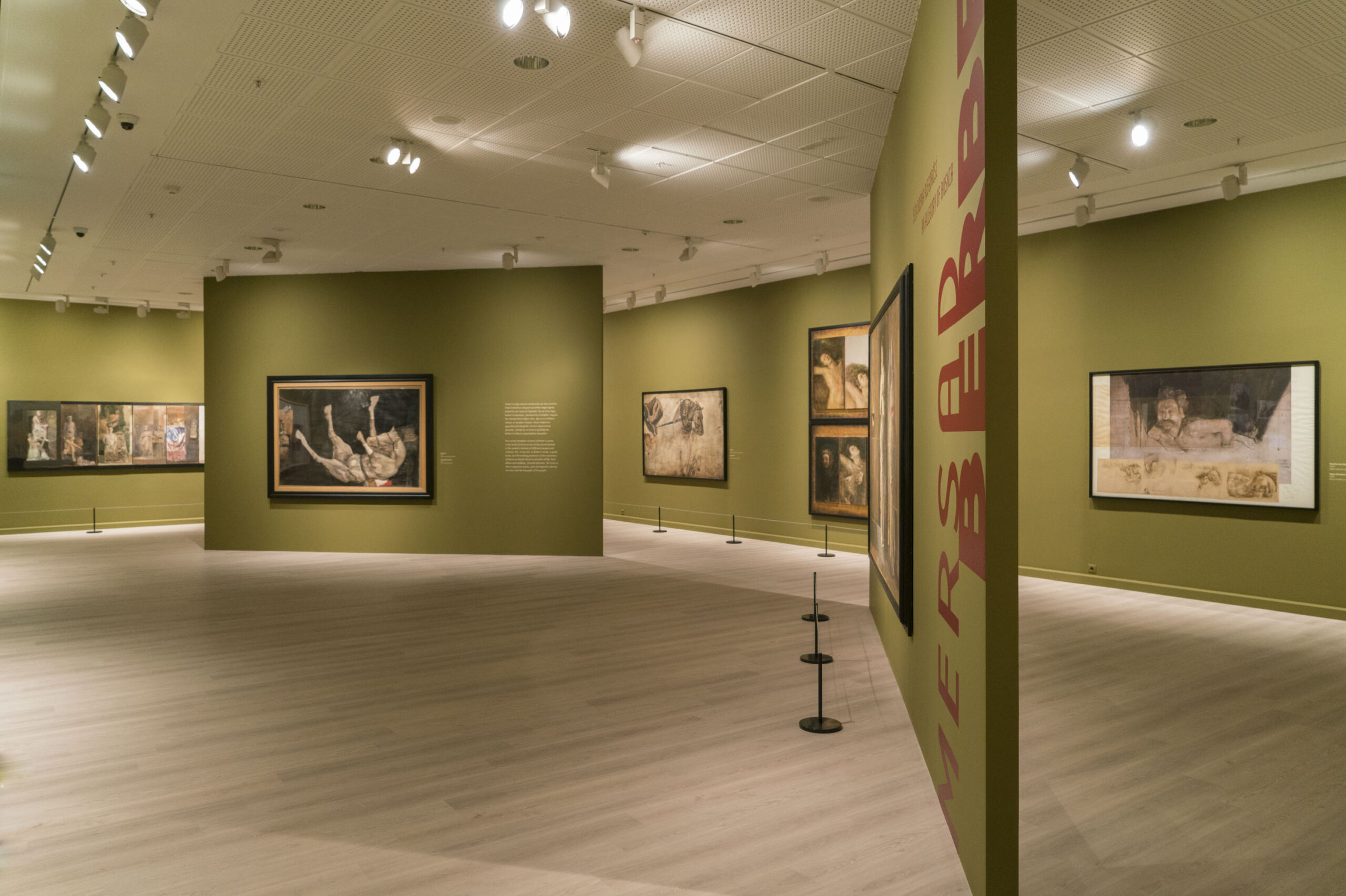
Istanbul’s Pera Museum is hosting a new exhibition devoted to Mersad Berber (1940 – 2012), a leading representative of Bosnian-Herzegovinian art from the second half of the 20th century
The latest exhibition at Istanbul’s Pera Museum clears up any doubts one might have about the institution’s love for the Balkans. “Mersad Berber: An Allegory of Bosnia” arrives on the heels of two major exhibitions on Balkan art: 2015’s “Images of Our Time: Works from the Academy of Fine Arts in Sarajevo” and last year’s “Cold Front from the Balkans.” Unlike these shows that impressively brought together works from large groups of young and legendary Balkan artists, “An Allegory of Bosnia” focuses on one defining figure of 20th century Bosnian and Herzegovinian art. Mersad Berber, the 1940-born graphic artist whose works were included in the Tate collection in the 1980s, is the subject here and while describing him in her essay for the exhibition catalogue, the show’s curator Aida Abadzic Hodzic quotes Argentinian writer Jorge Luis Borges, a cultural figure who had a similarly massive influence on the young practitioners of his art: “A man sets out to draw the world… A short time before he dies, he discovers that the patient labyrinth of lines traces the lineaments of his own face.”
More about this exhibition see here
Mersad Berber: An Allegory of Bosnia exhibition was centered on the art of Mersad Berber, who is one of the greatest and most significant representatives of Bosnian–Herzegovinian art from the second half of the 20th century. Inspired by the great European masters, from Renaissance to Art Nouveau, Berber’s works exemplify the deep, opaque whites of his journeys through the fairy tale landscapes of Bosnia to the dark, macabre burrows of Srebrenica.
The exhibition catalogue includes essays by Aida Abadžić Hodžić, the curator of the show and a well-known art historian teaching at the Academy of Fine Arts in Sarajevo, and by Edward Lucie-Smith, the art critic and the honorary consultant of the project. While Abadžić Hodžić concentrates on how the art of Berber reflects all the multi-layered cultural history of his country; Lucie-Smith, who had worked with the artist in several exhibitions, focuses on his art within the European art history scene.
final_P_berber tekst istanbul_eng_sk